



In praise of surgery
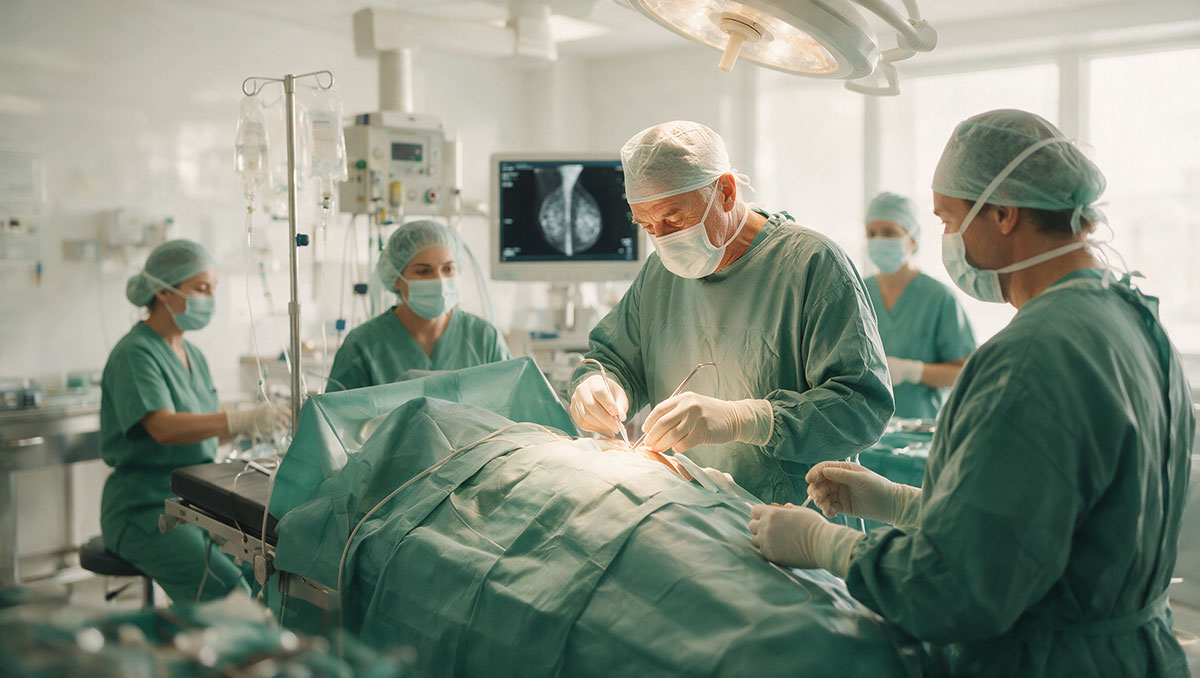
I openly challenge the manufacturers of drugs used in breast cancer treatment, as well as their representatives in clinical practice — physicians who treat breast cancer with medication. My position is clear and understandable to everyone except them: the patient’s best interest is to surgically remove the cancer from the body as soon as possible and to administer drug therapy after surgery. Their position appears to make sense only to them: they seek to marginalise surgery and remove it from breast cancer treatment, thereby increasing the use of their drugs and their financial profits, regardless of the fact that this

A new scientific study on the treatment of breast cancer
A NEW SCIENTIFIC STUDY ON THE TREATMENT OF BREAST CANCER MADE BY THE SURGICAL-DIAGNOSTIC TEAM OF "M. C. AESCULAP" Recently, the medical scientific journal Frontiers in Oncology has published a scientific study by Prof. Dr. Nebojša Ivanović and co-authors, under the title: Changing the role of pCR in breast cancer treatment - an unjustifiable interpretation of a good prognostic factor as a "factor for a good prognosis". The study proves that the recommendations of the European Society of Medical Oncology (ESMO) on mandatory complete implementation of preoperative (neoadjuvant) breast cancer chemotherapy before surgery are harmful for a significant percentage of patients. The

Smart patients
The active participation of an informed patient in his treatment significantly improves the results of that treatment and increases the probability of a final cure Patients are the greatest underutilised potential of health care for improving treatment results and disease outcomes. By becoming familiar with information about his disease, with possibilities and options in diagnosis and therapy, the patient can become a real expert for his disease, able to actively participate in the choice and planning of diagnostics and treatment, together with his doctors. The active participation of an informed patient in his treatment significantly improves the results of that treatment

Disease stage, biological characteristics, and aggressiveness of breast cancer
- NOT ALL BREAST CANCERS ARE THE SAME - The prognosis of breast cancer and the final outcome of the disease depends on two major parameters: 1) disease stage 2) tumor biological characteristics. First, a few words about breast cancer course and prognosis. Breast cancer is usually diagnosed in the so-called locoregional phase, when we can diagnose only the primary tumor in the breast and possibly the lymph nodes in the armpit affected by the tumor, while metastases on distant internal organs (liver, lungs, bones, brain) are not present or cannot be diagnosed at that moment by standard diagnostic means. However, the possibility of

Core needle biopsy
The text contains relevant data and opinions about the core biopsy. However, we believe that for a patient with a suspicious breast finding, it is better to start the treatment with surgery without a core biopsy. Arguments for this position are given in the final part of the text. A "core needle" biopsy, or just a "core" biopsy as it is often called, involves taking a piece of tissue with a specially designed hollow needle to examine the tissue under a microscope. The tissue sample is taken out in the needle and extracted from the area of concern. It has
Magnetic resonance in the diagnosis of breast diseases
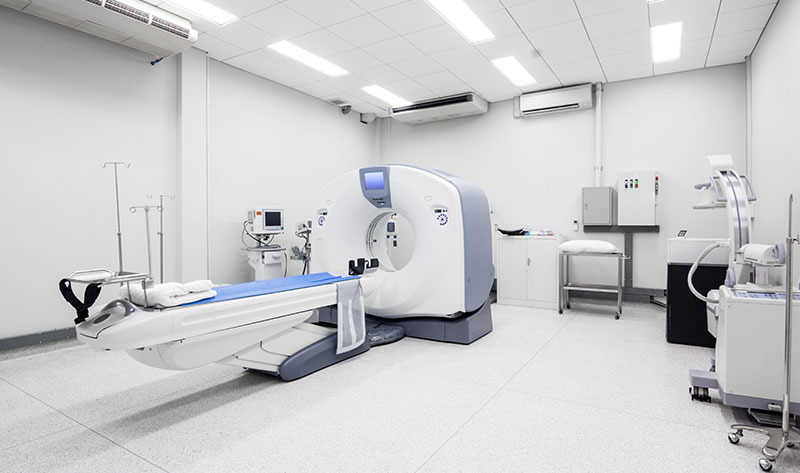
Nuclear magnetic resonance (NMR) is a valuable diagnostic tool in breast diseases, provided it is used following the indications. The diagnostic advantage of magnetic resonance imaging over palpation, mammography and ultrasound is evident in cases of atypical cancer tissue presentation. For example, when cancer recurrence in the breast is suspected after surgery, that presents itself in an atypical way due to the scar, or in monitoring the effects of neoadjuvant systemic therapy - drug therapy before the tumor is surgically removed from the breast. Magnetic resonance imaging is important in cases of suspected multiple small cancers in the breast to precisely

Neoadjuvant chemotherapy for breast cancer
In some patients, breast cancer treatment begins with the use of drugs (cytostatics and biological therapies) instead of the usual practice of first performing surgery to remove the tumor and lymph nodes in the armpit and then administering the drugs. Administration of drugs before surgery is called Neoadjuvant Chemotherapy (NACT), while administration of drugs after surgery is called Adjuvant Chemotherapy (ACT). The neoadjuvant approach is often not clear to patients and causes fear. They have the impression that their disease is particularly severe and advanced and that it is therefore not possible to perform surgery immediately after the diagnosis is made. They
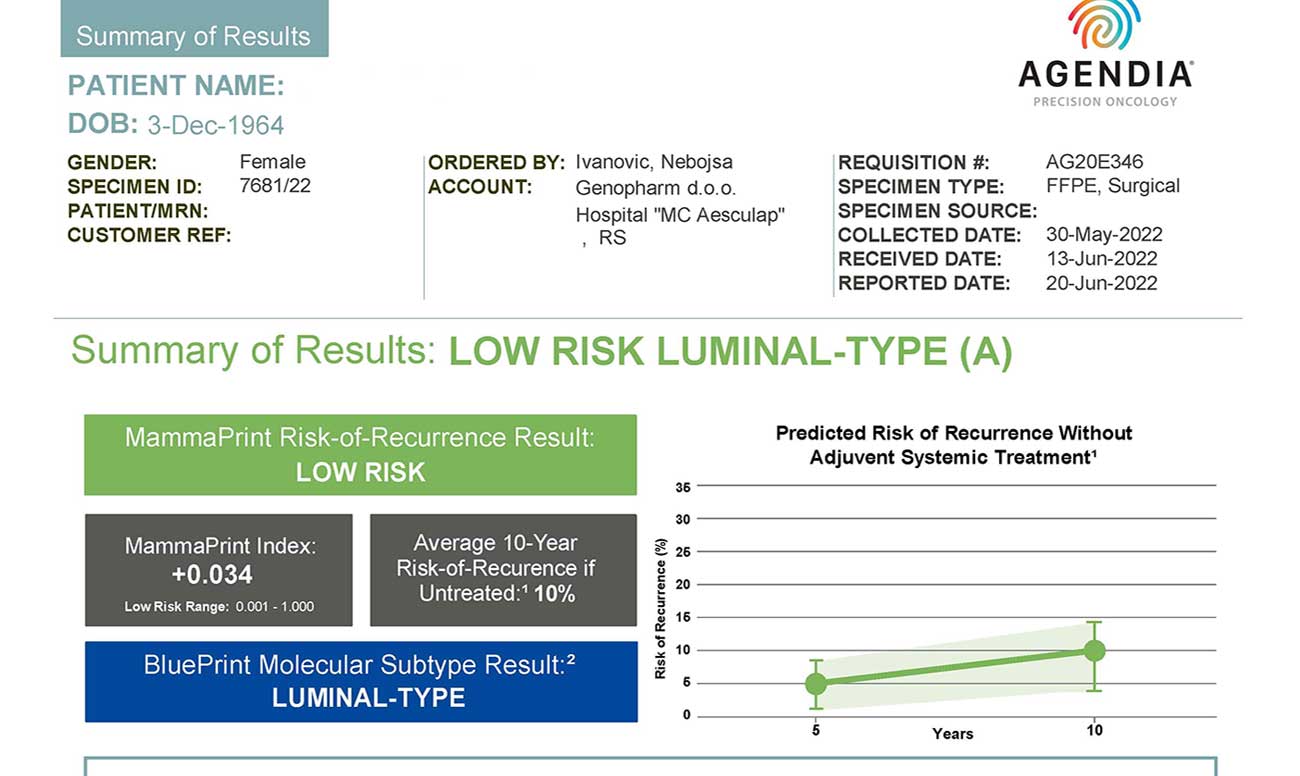
Genetic analyses of breast cancer (MAMMAPRINT)
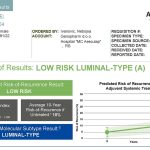
Genetic testing for breast cancer is the most modern and reliable prognostic tool for cancer biological aggressiveness. Tests are performed on tumor tissue surgically removed from the body. One of the genetic tests for breast cancer available in Serbia is MammaPrint. It processes 150 genes in tumor tissue and, based on their mapping, gives an estimate of the risk of disease progression on a scale of 0.001 to 1.00. These data are combined with standard prognostic parameters (disease stage, histological type of tumor, histological and nuclear grade, estrogen and progesterone receptors, Her2 receptors, Ki 67